Status of Grain Maize Production and Agronomic Efficiency of Mineral Fertilizer Use
The major region of grain maize cultivation in Russia is in the South. This article considers both mineral fertilizer use and maize productivity in the region. The agronomic efficiency of fertilizer applied to maize is summarized for two maize growing zones differing in annual rainfall. The profitab
Harvest in Tatarstan
Development of agriculture in Russia and its impact on fertilizer use
After 1990 the fertilizer consumption declined from almost 11 million t of nutrients (1990) to current 1,9 million t. And in spite of the slight increase during the last 5 years it hardly reaches 15% of the level in 1990. There are many reasons responsible for that fall. First of all the share of
Harvest in Tatarstan
Progress in Wheat, Sunflower, and Sugar Beet Cultivation in Russia
Progress with wheat, sunflower, and sugar beet production in Russia has been observed since the 1990s. Sugar beet cultivation has benefited the most due to the adoption of modern crop production technologies, including nutrient management. There are also real expectations for moderate yield improvem
Expansion of agriculture in Russia and its impact on fertilizer use
Particular features of Russian agriculture. Before the collapse of the Soviet Union Russian agriculture was characterized by large collective and state farms co-existing with small household plots. Radical economic transformation started at the beginning of the 1990s was aimed at constructive chan
Ongoing agriculture transformation in rural Russia
Before the collapse of Soviet Union? Russian agriculture was characterizes by large collective and state farms. These farms co-existed with small household plots. The radical economic transformation that began in the early 1990s aimed at bringing about constructivechanges in the national agrarian
Spatial variability of soil fertility parameters
In this region of Russia, routine soil sampling for agrochemical analysis is done manually and, most importantly, without precise reference of sampling points to a map. Thus, during the next soil sampling it is not possible to claim with confidence that soil samples are taken from the same place.
Rye field
Russian Agriculture Performance
Agricultural production in Russia is particularly subject to frost and drought. Fertilization accounts for about 10% of crop yields in the south to more than 30% in north Russia. According to the last soil survey (2005), 42% of Russia’s arable soils are low in humus, 44% have unfavorable acidity l
О регионе
Geographically, the Eastern Europe and Central Asia (EECA) region includes all former Soviet Union republics. The total area of arable land and permanent crops in the region amounts to 204 million ha. Three countries have 87 % of arable land: Russia 60%, Ukraine 16%, and Kazakhstan 11%. Currently, the EECA Program consists of two large regions: Central Russia, and Southern and Eastern Russia. IPNI activity in this region will initially be concentrated in Russia and Ukraine, and in the near future the Program will expand to include Kazakhstan.
Региональный директор
Dr. Svetlana Ivanova
Vice President, Eastern Europe and Central Asia
Заместитель директора
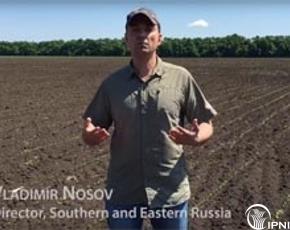
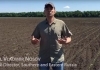
Dr. Vladimir Nosov
Director, Southern and Eastern Russia